

お知らせ
News
2026/06/02
KIJOKA BASHOFU × IKIGAI ①
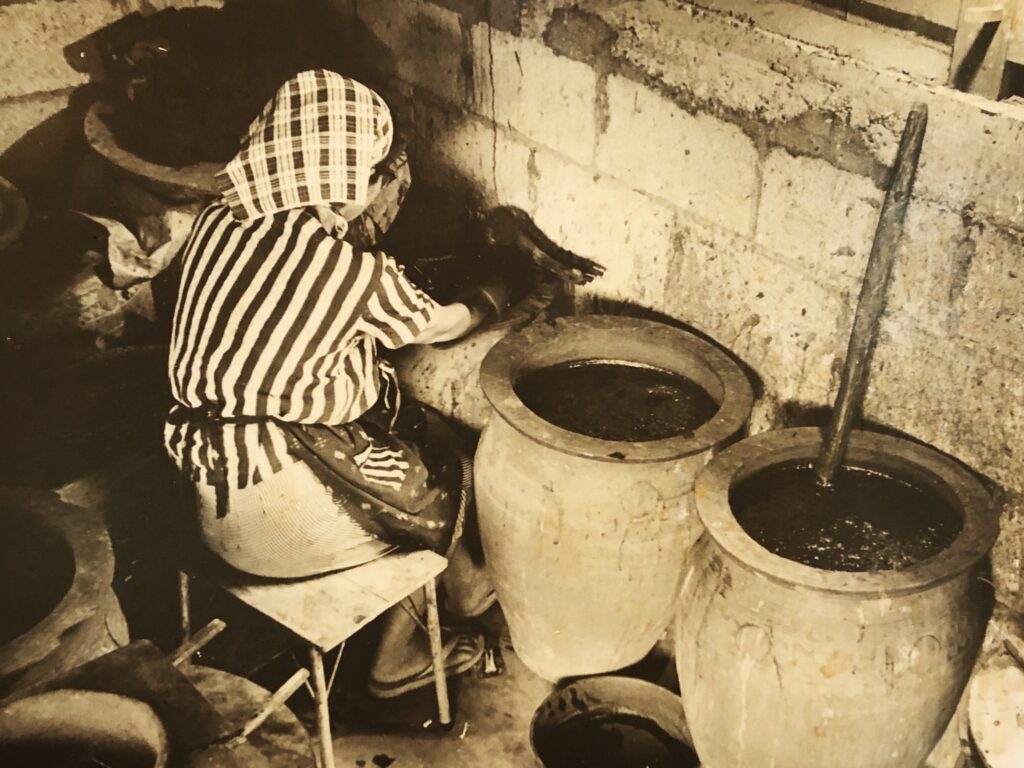
- Kijoka Bashofu has been preserved and protected by the many hands of those who found their true ikigai (reason for living) in this craft. In this upcoming series of columns, we will shine a spotlight on these remarkable individuals and their stories.
People who grew up watching their family work have kept those memories alive into adulthood, continuing to dedicate themselves to Kijoka Bashofu. For many of them, this craft has truly become their ikigai.
Ever since they were small, they helped out with the family business, doing tasks like U-umi (splitting and tying fibers) and Itokuri (winding yarn). Back then, for their parents, it might not have been a passion, but simply a means of survival—though perhaps it was a calling for some, too. In the end, these individuals take up the exact same craft as their grandmothers, mothers, or fathers, making it their own ikigai and carrying on the family legacy until the very end. They aren’t doing this because they stumbled upon someone else’s trade; it is the deep-rooted memory of watching their own family work that gives their lives purpose.
It wasn’t just their mothers or grandmothers either—the whole neighborhood was involved in making Bashofu, including aunts and fathers. Their fathers would handle tasks like Negiri (cutting the roots) and managing the Itobasho (fiber banana plants). Even if they temporarily moved on to different careers, the memories would eventually call them back. Some returned from big cities, some came back after life changes like getting married and divorced, and others even returned from abroad.